Bread & Butter Pickleball: Where Fun Meets High Performance

Bread & Butter Pickleball Overview
I’ll never forget the first time I saw a Bread & Butter paddle – the wild graphics and cheeky names immediately told me this company was different. Bread & Butter Pickleball was founded in 2022 by Doug Sapusek and is run with his two adult children as a passionate family team. Their mission is simple: bring more joy, creativity, and connection to pickleball. In other words, they make paddles that perform at a professional level without taking themselves too seriously. Each model has a playful spirit – from launching paddles into space to Bigfoot-themed photo shoots, BNB’s marketing embraces the “weird and wonderful” side of pickleball. If it makes players smile or say “what on earth are they doing?”, Bread & Butter is probably doing it!
What really draws me (and so many 4.0+ players) to Bread & Butter is that their paddles marry top-tier technology with a fun-first ethos. They use cutting-edge materials found in $250+ paddles, yet keep prices lower and designs bolder. We’re talking raw T700 carbon fiber, thermoformed unibody construction, and even experimental ingredients like dual-density foam cores and titanium weave faces – all wrapped in psychedelic artwork or sci-fi themes. As a result, BNB has quickly become one of the coolest new brands in pickleball, known for reliable high-performance gear with unique style. They also run an ambassador program and actively engage with the pickleball community, making every customer feel seen and celebrated.
For us competitive players in the 40+ crowd, Bread & Butter offers something special: paddles that can hang in high-level play and remind us why we fell in love with the game. The lineup spans from foam-core powerhouses to widebody control wizards, each with its own flair: – Loco – a full-foam core paddle for insane power and touch (“Pure Foam Power”)
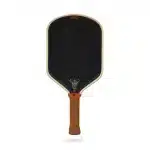
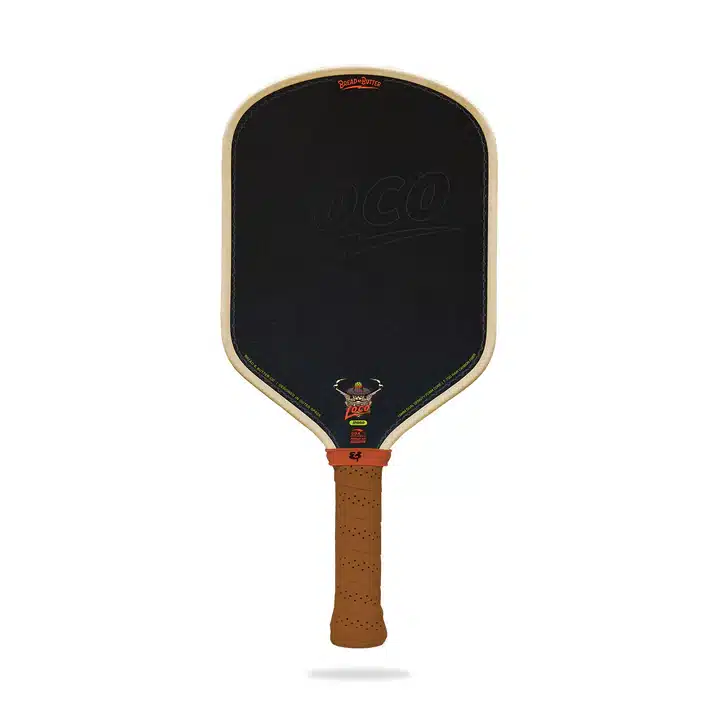
Bread & Butter Loco Top Speed
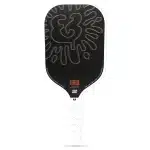
Bread & Butter Filth Best Foam

Bread & Butter Invader Top Control
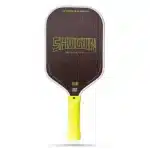
Bread & Butter Shogun Jack of All Trades
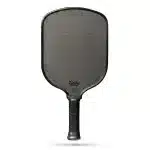
Bread & Butter Fat Boy Wide Body
Each of these paddles has its own personality and target playstyle. Below, I’ll dive into my first-hand experiences with each one – design, feel on the court, who it’s ideal for, and any notable usage by competitive players. (Spoiler alert: Bread & Butter’s gear has already started racking up accolades and even helped players punch tickets to nationals!) Let’s get into the good stuff.
Bread & Butter Loco PladdleGo Crazy LOCO Essay with full foam
Bread & Butter’s Loco absolutely lives up to its name – this paddle is crazy (in a good way). It’s BNB’s first foray into a full foam core paddle, and it was so well-executed that many are calling it the 2025 Paddle of the Year. After playing extensively with the Loco, I can see why.

Design & Build
In my hands, the Loco immediately feels solid yet surprisingly plush. It comes in multiple shapes (standard, hybrid, elongated), but I gravitated to the standard 16″ x 8″ model for maximum sweet spot. At ~8.0 oz, it’s a medium-weight paddle with an octagonal 5.3″ handle (4.25″ circumference) – a tad short, but with a comfy vibration-dampening wrap. The core is where the Loco breaks new ground: a 16mm dual-density foam core blending EPP and EVA foams. Unlike traditional honeycomb, this solid foam core doesn’t degrade or “crush” over time, so it should maintain pop and last longer than polypropylene cores. Bread & Butter even sandwiched in a layer of fiberglass beneath the T700 raw carbon fiber face for extra pop. The hitting surface is raw carbon (with UV-printed graphics in a funky tan/black design), so it has that gritty texture we spin-lovers demand. Overall, the Loco’s construction screams innovation: a fully injected foam interior (no honeycomb), thermoformed unibody, and high-end materials throughout. It basically took the nascent “Gen 4” foam-core concept and nailed it on the first try.
Despite all that tech, Bread & Butter kept the Loco accessible. The swing weight is around 108–110, which is moderate – you get some heft behind shots without feeling sluggish. And thanks to that foam, the paddle has a giant, very dampened sweet spot. BNB advertises it as having a “Giant. Sweet Spot.” and clean, predictable control. Indeed, on court I found the entire face remarkably consistent – mishits near the edge still got decent depth, and the paddle felt stable on off-center blocks. It’s like the foam fills in the dead spots. The sweet spot isn’t quite endless (the elongated Joola J2NF had a hair more forgiveness), but it’s generous enough that I never had to go searching for it. As BNB cheekily notes, this paddle “plays best con humo en el aire” (with smoke in the air) – in other words, it’s built to crush some balls and look cool doing it!
Feel & Play Style
My first few hits with the Loco were eye-opening. The paddle felt immediately “elite” out of the box – no break-in, no adjustment period needed. Contact is plush and controlled (that foam really softens impact), yet the ball explodes off the face when you want it to. I noticed zero of the wooden or harsh feel that some new-tech paddles have; instead, the Loco felt responsive and lively from the first swing. Dinks and drops sit nicely on the face with a cushioned feel, giving me confidence to place the ball on a dime. Then, when I step on the gas, the Loco unleashes real pop – groundstrokes drive hard and low, and smashes put the ball through the court. It’s like this paddle solves the classic power-vs-control tradeoff: “power when you need it, touch when you want it,” exactly as one reviewer described.
Spin generation is also top-tier. The T700 carbon face has “insane grit” – my fingers can literally feel the texture – and it bites the ball hard. In play, I noticed my heavy topspin serves jumping off the bounce and my roll volleys dipping sharply, often eliciting outright misses from opponents. In fact, Pickleheads clocked the Loco’s spin as 10/10, putting it up there with the very spinniest paddles on the market. I can attest: kick serves, topspin lobs, cut dinks – the Loco gave me wicked confidence to add shape to all of them. And all that spin couples with the foam core’s naturally higher launch angle to really make aggressive topspin drives dive in.
Despite its lively nature, the Loco’s predictability stands out most. The feedback is slightly muted (foam dampens vibrations well), but I still get enough response to feel the ball’s dwell. The paddle’s “big” feel meant that even against heavy hitters, I could counter reliably – chest-high volleys would sink into the paddle and then catapult back with interest. On defense, the stable face helped me reset tough shots without them popping up. Simply put, the Loco plays balanced: loads of put-away power (rated ~9.5/10) matched with truly elite control (10/10) – as good or better than many pure “control” paddles I’ve tried. It’s rare to find a paddle that never forces you to choose between being a banger or a finesse player in a rally, but the Loco lets me comfortably be both.
If I have to nitpick the feel: the 5.3″ handle is short for two-handed backhands. I can do it by overlapping my hands, but if you love two-handed swings, you might feel cramped. Also, compared to something like the Honolulu J2NF, the Loco is slightly less forgiving out near the edges – that’s the tradeoff for its extra liveliness and put-away power. Early intermediate players who want a super-cushy giant sweet spot might prefer a more muted paddle, but for anyone 4.0 and up, the Loco’s combination of soft feel and jump when you accelerate is downright addictive.
Ideal Player Profile & Comparisons
The Loco quickly became my go-to recommendation for players who want top-of-the-line performance without the typical quirks of new tech. It plays like a “total knockout” all-court paddle: if you’re an aggressive player looking to add touch, or a control player looking to add put-away power, the Loco could be your dream paddle. I’d say it best suits advanced intermediates up through tournament players who play a mix of soft and hard. If you thrive on countering attacks and then initiating your own, the Loco’s your paddle. One 5.0 tester said it perfectly – it “just felt awesome” immediately, letting him dink precisely and “finish when a window opened”. That’s exactly my experience: the Loco lets me play my all-around game at full confidence and speed.
In terms of comparisons, the Honolulu J2NF (an elongated foam-core) is often mentioned as a close competitor. I’ve hit extensively with the J2NF, and it indeed has a bigger sweet spot and uber-forgiving face, thanks to its wider shape. However, the Loco felt more lively and explosive – it brings more finishing power and “go” when you accelerate. It’s also less head-heavy, making it quicker in hand battles. Another comparison is the Six Zero Black Diamond (DBD) series – those are known for crazy control and spin. The Loco’s control is on par with the best Six Zero or Selkirk control models, but with more free power on tap. Versus a JOOLA Perseus or CRBN foam series, I found the Loco softer feeling (no carbon “ting”) yet equally powerful – a rare combo. It truly feels like B&B took the best attributes of flagship paddles and rolled them into one. And notably, at ~$199 retail, it’s significantly cheaper than some big-name “Pro” paddles that it competes with in performance.
(In summary: The Loco combines foam-core plushness with raw carbon explosiveness like nothing else. It’s my personal favorite all-around paddle right now – a true do-it-all stick that doesn’t compromise. Bread & Butter swung for the fences with their first foam paddle, and they absolutely hit a home run.)
The Filth – A “Filthy” Power-Spin MachineGet Down And Dirty
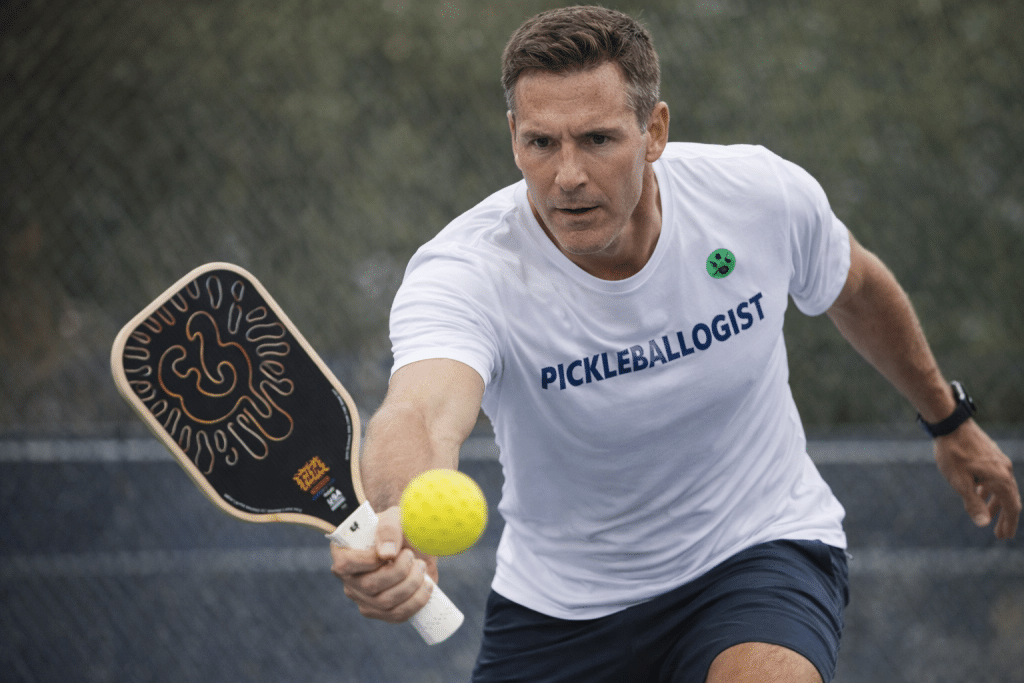
Just the name Filth makes me grin – and trust me, this paddle can hit shots as dirty as its name implies. The Bread & Butter Filth is their flagship raw carbon thermoformed paddle, built for players who love to attack. I’ve spent countless hours with the Filth, and it has cemented itself as one of the best power paddles on the market (I even called it my top power pick of 2023). But the beauty is, it’s not one-dimensional – this thing has touch and spin to spare as well.
Design & Build
The Filth’s pedigree is instantly recognizable: it shares a similar profile to other high-end raw carbon paddles (think CRBN 1X, Legacy Pro, etc.), but BNB adds their own twist. It’s a 16mm thick, thermoformed paddle – meaning the T700 carbon fiber face wraps around a unibody polymer core, with heat-molded sealed edges. The core is a high-density polypropylene honeycomb (the classic “gen 3” construction) injected with foam around the perimeter and in the handle. This foam-injection adds stability, enlarges the sweet spot, and dampens vibrations – all hallmarks of the popular thermoformed paddles today. In terms of shape, the Filth initially launched in an elongated form (16.5″ x 7.375″, 5.5″ handle), which is the one I use. Bread & Butter has since offered hybrid and standard shape options, but the elongated “1X-style” shape is my favorite for its reach and spin leverage. The handle at 5.5″ accommodates two-hands comfortably, and the grip is standard 4.25″ circumference with a slightly tacky stock grip. Despite the length, the paddle weighs ~8.0 oz (mine was 8.1), and BNB nailed the weight distribution: a measured swing weight ~112 and twist weight ~7.3 mean it’s quick in hand yet solid on contact.
Where the Filth really stands out is materials and finish. The face is raw T700 carbon fiber, giving that sandpaper feel for maximum spin. No cheap paint job here – it’s the same premium carbon found on $200+ paddles. In fact, the Filth has been noted to be “almost identical to the CRBN-1X Power Series” in materials, but at a fraction of the cost. The design on the face is a funky psychedelic swirl (each color variant has a different vibe – mine is the “Brown Noise” with a trippy brown/orange pattern). It’s loud and unique, which I love, as it stands out from the army of plain black paddles. Construction quality is excellent – thermoforming can sometimes lead to surface issues, but my Filth’s edge seam is clean and the grit lasts reasonably well. B&B clearly spared no expense in the build, aiming for “the perfect balance of durability, touch, and power”. They succeeded: the Filth feels like a solid one-piece paddle that can take a beating. After months of play, no delamination or significant grit wear – it’s rock solid (and BNB’s 6-month warranty has me covered if anything did pop up).
One more design note: the Filth is injected with competitive attitude. Even the name and marketing embrace that it’s built for aggressive play. It’s called “The Filth” because BNB wants you hitting shots “so dirty your opponents need to wash up after” (I might have made that slogan up, but it fits!). Yet, sneaky enough, this paddle has a softer side too, which I discovered over time.
Feel & Play Style
From the first crack of a ball, the Filth announces itself as a power paddle. It has explosive pop – arguably the most raw power I’ve felt in a legal 16mm paddle. My serves and drives came off fast and deep, often catching opponents off guard with their pace. In fact, when I first tested serve speeds, the Filth was averaging ~59–60 mph for me, putting it in the upper echelon for paddles I’ve measured. B&B somehow squeezed out even a touch more power than a CRBN 1X, which was a surprise. Smashes and high volleys with the Filth are just fun – you see a ball sit up, and you can absolutely crush it knowing the paddle’s got top-end put-away ability. I’d rate the power a 9.5/10 – enough that I named it the hardest-hitting paddle of 2023. Yet, interestingly, it’s not uncontrollable power. The thermoformed design and foam perimeter create a slightly softer feel than some other power paddles. There’s a hint of flex and dwell (just a hint) that gives you feedback and some pocketing, rather than a completely board-like impact.
The Filth’s spin is downright filthy. The raw T700 face and gritty texture allow me to impart tons of rotation. I noticed immediate jump on topspin shots – heavy drives would dive down last second, and cut serves would skid nastily. Third-shot drops with slice had that wobbly, spinning action that makes them hard to read. In testing, I achieved spin rates in the same ballpark as the top spin paddles: about 1850–2000 RPM on average, just shy of the spin monsters like Legacy Pro (which might hit ~2100). In practical terms, I could hit nasty roll volleys and dips that frankly elicited some “that had a lot of spin!” comments from opponents. It’s telling that a reviewer scored the Filth 10/10 on spin, equating it with CRBN and Gearbox’s best, and only a hair behind the top Legacy in pure RPMs. So if you have a modern game with rolls, flicks, and heavy cut dinks, the Filth gives you the tools to execute. The combination of power + spin is what makes this paddle so lethal for aggressive players – you can rip with confidence that the spin will help keep the ball in.
Now, about control and touch – initially, I had to tame the Filth. My first outing, I’ll be honest, I sent a few third-shot drops sailing long and a few volleys a bit high. The lively face took some adjustment; I had to dial down my backswing and trust a softer hand in the short game. Early on, I might’ve given it a 7/10 for control. But a funny thing happened: by the third or fourth session, the Filth started to feel much more controllable. I got used to its pop and learned to leverage the spin and slight flex for better touch. Soon I was dinking and dropping with confidence – even pulling off some nasty topspin drop shots on occasion. At that point I’d rate the control more like 8/10. It will never be a pillow-soft paddle (nor is it meant to be), but it has enough feel to execute an all-court game once you adjust. The surface grit adds a bit of grab on slow balls too, which helps with consistency on soft shots. By the end of my testing, I was happily mixing drives and drops – I’d rip a drive, then on the next shot hit a gentle dink; the Filth let me do both as long as I was intentional.
A key aspect of the Filth’s feel is its forgiveness – or relative lack thereof. Let’s be clear: elongated thermoformed paddles tend to have smaller effective sweet spots than widebody paddles. The Filth is no exception. The sweet spot is medium-sized at best. Center strikes feel phenomenal, “a really sweet connection that transfers a lot of energy to the ball”. But venture toward the edges or near the throat, and you’ll feel deadness and some loss of pop. Especially in the first couple weeks, off-center hits would die into the net or come off weak. It’s just physics – narrower face means less area to flex. Compared to something like a Six Zero Double Black Diamond, which has an enormous sweet spot, the Filth will punish mishits more. I wouldn’t say it’s any worse than similar paddles (CRBN 1X, Legacy, Vatic Pro) – they all have their dead zones. But if you struggle with mishits or want a very forgiving paddle, the Filth might frustrate you. That said, I found the sweet spot adequate after getting used to it, and the upside of the design is you get that added maneuverability and speed from the slimmer shape. At ~8.0 oz and with a head-light feel (for a TF paddle), the Filth is quicker than many peers – “fast at the kitchen…served me well in hand battles,” as one reviewer noted. I definitely agree; it doesn’t feel sluggish or overly head-heavy. BNB kept it light enough that you can react fast, which is crucial for us 40+ folks whose hands aren’t getting any faster! And because it’s light-but-solid, you can add a bit of lead tape if you crave more stability without killing its maneuverability (I personally added 2g total at 10 and 2 o’clock, and it still felt nimble).
To sum up the feel: the Filth plays like a high-octane sports car – super fun and lively once you get the hang of it. It’s got a springy, slightly wild personality at first (expect some “flyers” until you adjust), but it rewards you with serious put-away power, massive spin, and surprisingly decent touch for its class. The pop is there when you need to speed up at net, yet it’s not so uncontrollable that you can’t dink – you just have to develop a soft touch to go with your slap. The Filth’s feel has actually made me a better player, forcing me to refine my soft game while enabling my aggressive tendencies.
Ideal Player Profile & Comparisons
The Filth is tailor-made for aggressive players. If you’re a banger, love to drive, thrive on attacking – this paddle will put a huge grin on your face. I have a pretty aggressive style myself (big serves, heavy drives, lots of topspin), and the Filth felt like it was made for me. It allowed me to play an all-court game at a higher level: I could start a point with a nasty serve, win a weak return, then slow it down if needed, and re-attack with spin – basically play high-percentage offense. Intermediate and advanced players who want power and spin in spades should definitely try the Filth. Importantly, it also has enough control to be a true all-court paddle for a skilled player. One reviewer aptly called it “a true all-court paddle—especially if you’re a power and spin player”. That captures it: this isn’t a pure brute-force paddle; it’s for the modern aggressive player who still needs to drop and dink when required.
Who should maybe avoid it? If you’re a finesse-first player or a beginner still working on consistent contact, the Filth might be too lively. Someone used to a super soft paddle (like a Selkirk Labs 002 or a control fiberglass paddle) might find the Filth “wild” and the response too poppy at first. Also, if you have trouble with mishits, note that paddles like the Legacy Pro or Six Zero DBD have noticeably larger sweet spots and more forgiveness. The Filth’s sweet spot isn’t tiny, but it’s not its selling point either. Finally, players who prefer a muted feel might lean toward a CRBN-1X or others which are a tad softer at impact. The Filth has a more raw, responsive feel (some might say a bit “loud” in feedback, though I personally enjoy that).
Speaking of comparisons: The Filth was directly compared to the CRBN 1X Power in reviews, and for good reason. They share dimensions, thickness, face material, etc. Having hit both, I agree with the consensus: the Filth plays very similarly to a CRBN 1X, just a touch more explosive and a touch less plush. A CRBN 1X might give slightly more “controlled power” – it’s a tad more muted on contact – whereas the Filth feels a hair more raw and lively. But performance-wise, they’re in the same league. The kicker is the Filth is ~30% cheaper. I’ve literally told friends, “It’s like getting a CRBN for $165.” Another big name is the JOOLA Hyperion CFS 16 (Ben Johns’ paddle). The Filth is actually more powerful than my Hyperion was, and similarly spinny. The Hyperion might edge it in stability (slightly thicker core feel), but the Filth swings lighter (my Hyperion was more head-heavy). Versus the Legacy Pro (which many considered the power champ of early 2023): the Filth hits harder – I was surprised too, but side by side I could put balls away easier with the Filth. Legacy Pro might have had a tad more forgiveness though. The Six Zero Double Black Diamond (DBD) – that paddle has monstrous spin and a huge sweet spot. The Filth matches the spin and maybe exceeds the power, but DBD is more forgiving and heavier. So the Filth is a bit more maneuverable and “fun”, whereas DBD is a stability beast. I also compare it to the Vatic Pro Prism Flash (thermoformed but tuned for control) – and indeed, the Filth is more wild and lively than the Prism Flash, which is why I prefer Filth for my aggressive game. In short, among the new-gen thermoformed carbon paddles, the Filth is squarely a top contender if not the leader in the power-spin category.
Another selling point: value. For $165, it undercuts many competitors that it equaled or outperformed. As an intermediate or even tournament player, you’re getting 95% of the performance of the most expensive paddles, and in some cases more power, at a much lower price. That makes the Filth ideal for someone who wants pro-level tech without dropping $200+. BNB basically democratized the thermoformed power paddle, which I respect a lot.
The Invader – Spin, Control, and Sci-Fi FlairConquer The Borg, Klingons and More
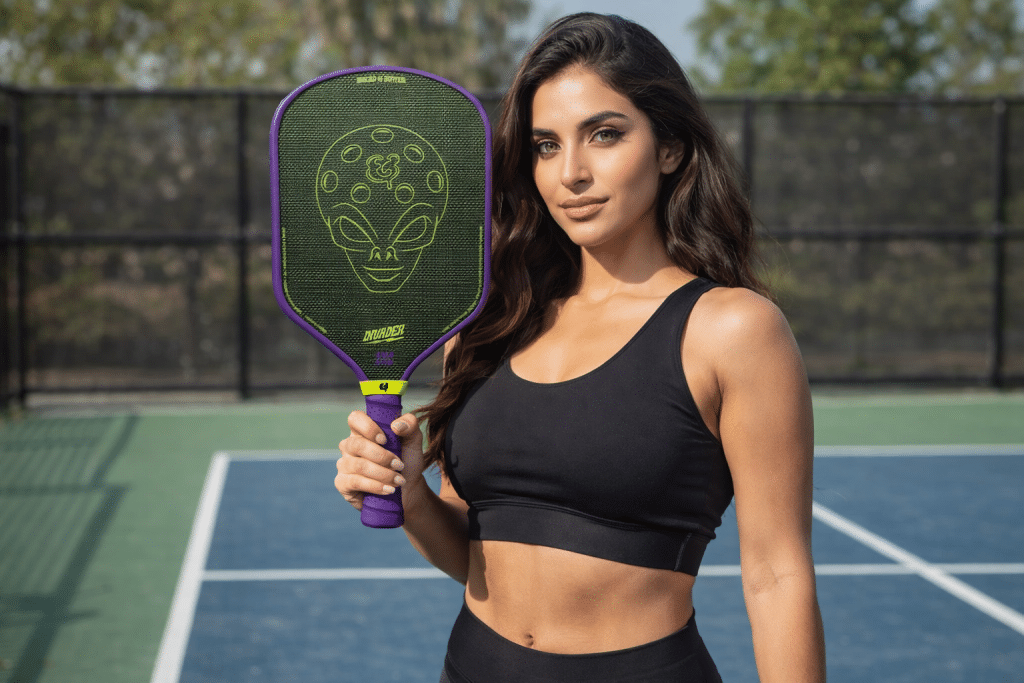
Next up is the Bread & Butter Invader, which might be the most unique paddle in the lineup. The Invader looks like it came straight out of a sci-fi movie – neon green alien graphics and all – and it plays with a distinct character as well. B&B pitched this as an intermediate-friendly, spin-oriented paddle, and after playing with it I’d call it a versatile “control meets spin” paddle with a poppy twist. It’s also the sibling to the Shogun in some ways (sharing some tech), which we’ll get to. Let’s break down the Invader.
Design & Build
The Invader stands out even before you swing it, thanks to its bold design. The face has a wild alien graphic that definitely turns heads (I got more than a few “whoa, cool paddle!” comments). But under the hood, this paddle packs some advanced tech. The Invader is built on a 16mm polypropylene core (honeycomb) like a typical paddle, but the face material is special: it’s a hybrid weave of T700 carbon fiber and titanium, plus an additional fiberglass layer. Essentially, Bread & Butter took the carbon+titanium concept of the Shogun and added fiberglass to the recipe for the Invader. The idea is that the carbon/titanium weave gives control and a solid feel, while the fiberglass layer adds easy pop and a bit more liveliness. It’s an unusual combo – I haven’t seen any other brand mix three materials like this. But B&B is all about experimenting, and this certainly qualifies as intergalactic tech!
The Invader’s shape is what we call a “hybrid” shape. It’s about 16.2″ long and 7.6″ wide – so in between an elongated and a standard. This shape aims to blend the aerodynamic reach of an elongated paddle with a bit more width for a larger sweet spot (indeed BNB markets it as their hybrid shape). The handle is 5.3″ long (same short-ish length as the Loco and Fat Boy) and a comfortable 4.25″ circumference. The paddle’s weight is ~8.1 oz average, with mine coming in around 8.2. Its balance felt slightly toward the head but not extreme. I later found swingweight measurements around the high teens (maybe ~116) which is moderate for a hybrid. One thing I appreciate: the Invader has that same octagonal handle with dampening wrap as the others, so it feels familiar and absorbs shock well.
Notably, the Invader is thermoformed as well – it has the wrapped carbon/titanium around the edges. And yes, it’s also foam-injected in the rim (and possibly handle) for stability. So, although it’s positioned as an intermediate paddle, it actually boasts all the construction hallmarks of the top-tier paddles (unibody, thermoform, perimeter foam). Bread & Butter didn’t skimp on tech here. They just tuned it differently: the fiberglass layer on the face is what gives the Invader its personality. Fiberglass generally increases power/popup and gives a softer feel, but can sometimes create a bit of a “thuddy” contact if not done right. The carbon+titanium weave underneath likely serves to stiffen it back up some and maintain control. It’s really an interesting build – I haven’t seen titanium in any other brand’s paddle, period (Shogun/Invader are firsts), and combining it with fiberglass is bold. The design theme matches the name: it’s futuristic, daring, and a little alien!
Quality-wise, my Invader is well-made. The surface grit is there (raw carbon texture on top of fiberglass). The sweet spot measured medium in my bounce tests – about what I expected for a hybrid shape, definitely smaller than Fat Boy’s, but a tad bigger than Filth’s elongated sweet spot. B&B advertises it as a medium sweet spot, and that lines up. Off-center hits have some stability thanks to the foam, but you still feel a noticeable drop-off toward the edges (more on that in play feel). Overall, the Invader’s construction seems aimed at providing a balance: not as power-heavy as the Filth, not as extreme as the Shogun, but something in between with a spin/control emphasis.
Feel & Play Style
Picking up the Invader after being used to the Filth/Shogun, the first thing I noticed was the contact feel is different. The ball has a bit of an “irregular” or hollow feel at impact sometimes. I suspect this is the fiberglass layer at work. Fiberglass-faced paddles (like some Engage or older Selkirks) often have a “thud” or less crisp feel compared to pure carbon. On the Invader, it wasn’t unpleasant, just different. Initially, it almost felt like the ball was sinking in and then rebounding oddly. It took me a few sessions to get fully accustomed to this feedback. Once adjusted, though, I found the Invader to have a fine balance of power and control – both around an 8/10 in my mind.
Let’s talk power: The Invader isn’t a knockout paddle in the power department. Coming from the Filth, it was noticeably less explosive. On drives and serves, I had to swing a bit harder to generate the pace I wanted. In fact, I’d say the Invader’s power is adequate but not its selling point. A reviewer noted that putaway power is lacking compared to Filth or Six Zero DBD, and I’d agree. My serves with the Invader were maybe 2-3 mph slower than with the Filth. It’s not a weak paddle – I could still drive the ball past opponents when I stepped in – but if pure power is your priority, you might crave more. On the plus side, the slightly lower power means the Invader is easy to control off the baseline. I rarely hit balls long with it; depth was consistent and predictable. So in baseline rallies or resets, I appreciated that it wasn’t overly jumpy.
Now, spin is where the Invader shines brightest for me. This paddle can grip the ball incredibly well. The combination of the textured carbon/fiberglass surface and perhaps the flex of fiberglass yields huge spin potential. I had a blast hitting high-arching topspin lobs and heavy topspin serves – the ball would arc up and then dive down with a big kick, often surprising opponents with a late jump. My backhand rolls were also hooking nicely. I’d comfortably rate spin 9.5/10 on this paddle. In fact, Pickleball Effect’s testing gave it around 94% spin score – one of the higher on their list for all-court paddles (nearly on par with spin-oriented paddles like Legacy or CRBN). You can really feel the ball stick and then sling off the face. For players who want to add spin to their game, the Invader absolutely delivers. I also noticed high spin on cut shots – defensive slices stayed low and aggressive. So whether brushing up or cutting under, the surface plays great.
On the touch and control front, the Invader is solid. Dinking and dropping felt natural after the initial adjustment. The paddle has a bit of flex so it’s not ultra-stiff; there’s a slight catapult which you modulate with grip pressure. Once I got used to it, I was hitting very consistent third-shot drops – the fiberglass actually gives a nice easy lift for soft shots. You don’t have to work hard to get the ball over the net on a dink; the paddle’s natural pop helps with that. However, too much pop can be an issue in the soft game if you’re not careful. I did have some routine drops pop up higher than intended early on. This is that “pop challenge” that the Shogun/Invader faces – they have a bit more bounciness than a pure control paddle, meaning touch shots require a gentle hand. After practice, though, I could manage it fine. The upside is on volleys: if a team tried to out-dink me and then speed up, the Invader’s pop let me counter speed-ups at any height effectively. It’s quick to reload and punch back. At the kitchen line, the paddle feels quick and maneuverable, in part due to the hybrid shape. I felt I could win hand exchanges, and the little extra width gave me confidence when reaching for firefights. In fact, one of the Invader’s strengths is at the net in fast exchanges – it’s fast enough to compete, and that pop can put the ball away when you get an opening.
Forgiveness on the Invader is a mixed bag. The sweet spot is medium-sized and does not extend to the edges well. Off-center contact, especially low toward the throat or high on the tip, felt a bit unstable and dead. It’s definitely less forgiving than the Loco (foam core) – with the Loco I could get away with more. The Invader will remind you when you miss the center by softening the shot noticeably. That said, in the central hitting zone it’s plenty forgiving. It’s just not going to bail you out on extreme mishits. Twist weight is decent (around 6.5–7), so it’s not terribly twisty on off-center hits, but you lose pace. In other words, you still need to have reasonably clean strokes to get the most out of it.
I also want to mention vibration/feel: the Invader felt comfortable with minimal vibration thanks to the foam edge and dampened handle. It’s arm-friendly. The only odd sensation was that aforementioned “not smooth” feel on some hits (likely the fiberglass feedback). For example, an Engage Encore Pro (fiberglass face) has that kind of feel too. It doesn’t impact play much, but some purists who love the crispness of carbon may not love the Invader’s feedback. Personally, I adapted and it didn’t bother me after awhile.
The Invader is aimed at intermediate players (3.5–4.5) who want to introduce more spin and balanced play into their game without handling an “ultra-power” paddle. If you are a control-oriented player looking to step up your aggression a notch, the Invader is a great option. It provides that fine equilibrium of not being too hot to handle, but giving you enough oomph and a lot of spin to start playing a more offensive style. I noticed that when I loaned it to a 4.0 friend who normally uses a control paddle, he immediately loved how he could hit loopier topspin shots that he normally couldn’t, yet he didn’t sail his dinks long. That’s exactly who it’s for: players adding spin to their arsenal, while keeping their soft game consistent. It’s also a visually fun paddle, which might seem minor, but enjoying the paddle you have can inspire confidence and connection to your gear (and this thing definitely has “cool factor” for sci-fi lovers).
For advanced players (4.5+), the Invader can still be a good all-court paddle if you don’t crave maximum power. In fact, Pickleball Effect gave it a “Best All-Court Paddle” award in its class, highlighting its strong blend of control (90%), spin (94%), and respectable power (86%). So an advanced player who primarily values consistency and spin might find a lot to like. However, many advanced players might lean to the Filth or Shogun instead if they want more put-away capability. As one review concluded, “Overall, it’s hard to recommend the Invader over the Filth… Filth offers higher levels of power and spin, with plenty of control and forgiveness too, and is also cheaper”. That’s a bit blunt, but it’s a fair point: if you can handle the Filth, that paddle is likely more rewarding at high levels. The Invader sits in a niche where someone doesn’t want the full explosiveness of a Filth or the price of some top paddles, but wants a reliable, spin-heavy paddle to grow with.
In terms of comparisons: The Invader reminded me somewhat of the Engage Pursuit EX 6.0 (a control/spin paddle), but with a twist. The Engage has that fiberglass+carbon vibe too (their new Pursuit EX has a textured graphite face with control). Engage’s feel is smoother though. Engage paddles like the Encore V2 were known for a weird feel – interestingly, the Invader gave me a flash of the Encore Pro feel (which also had a fiberglass layer). Performance-wise, the Invader has more spin and equal or more pop than those Engage paddles, but less control than the highest-control ones like Pursuit. Another compare: Six Zero DBD Control – a popular all-court option. The DBD Control is more expensive (~$180) and offers a great blend of power/control. I’d say the Six Zero likely has more power than Invader and a larger sweet spot, but maybe a tad less spin (Six Zero uses raw carbon only). For value, the Invader at ~$190 isn’t cheap, but it’s unique. You might also consider the Ronbus R2 Pulsar (all-court control paddle), as Pickleheads suggested – but that’s a smaller brand too. Honestly, the Invader’s closest “competitor” is probably its own brother, the Loco (in hybrid shape). The Loco Hybrid is another 16mm hybrid-shape paddle with great spin and more power (thanks to foam core). If you want more forgiveness and a smoother feel, the Loco might edge it. But the Invader has that titanium stiffening which some might say gives it a more solid feel on center hits.
The Shogun – Titanium-Infused All-Court CommanderSubtitle
When I first heard Bread & Butter was releasing a paddle with titanium in the face, I was equal parts skeptical and intrigued. Enter the Shogun, B&B’s elongated all-court paddle that boasts the industry’s first carbon fiber and titanium woven surface. After playing with the Shogun, I can say this: it’s a unique paddle that offers a rare blend of power and control, aimed at players who found raw carbon paddles too hot to handle. The Shogun has a bit of a cult following now (some even say it’s B&B’s best paddle), and I can see why – it truly feels like Filth and Loco had a baby, in the best ways.
Design & Build
The Shogun’s specs immediately tell you it’s an elongated, attack-oriented paddle. It measures 16.5″ long by 7.375″ wide – a classic long shape identical to the Filth’s dimensions. It also shares the 5.5″ handle length (plenty for two-hands) and 4.25″ grip circumference. So essentially the Shogun uses the same mold as the Filth, but the internals and face are different. The core is a 16mm high-density polypropylene honeycomb (similar base core) with thermoformed construction and foam injection around the edges. So yes, it’s a thermoformed unibody paddle like the others – strong, sealed edges, durable build. Where it goes wild is the face: B&B created a never-before-seen Carbon Fiber and Titanium weave for the hitting surface. They literally wove titanium strands with T700 carbon fiber to create a new material. The goal was to soften the raw carbon’s response and add control, since titanium has different flex properties. It’s akin to how some brands experimented with Kevlar weave (like Pickleball Apes did) to modify feel. Here, the titanium is ultra-thin (you’re not going to see metal flakes or anything), but it’s embedded in the face weave. This makes the Shogun the first paddle in pickleball with titanium in the surface – truly an experimental powerhouse design.
The Shogun’s aesthetic is sleek – mine is mostly black with subtle pattern from the weave and some samurai-inspired graphics. It definitely has a premium look. Weight-wise, it came in around 8.2 oz. The swingweight is high (~120) and you feel that in the head-heaviness. Compared to the Filth (SW ~112), the Shogun has more mass in the head, meaning more plow-through but a tad slower to maneuver. The twist weight measured around 6.1–6.2, which is moderately low – interestingly lower twist stability than the Filth’s ~7.3. I think this is because the Shogun face doesn’t have the same foam stability or perhaps the titanium changes weight distribution. In practice, it felt stable enough, but I did notice a bit of torque on off-center hits (not troubling, just noticeable).
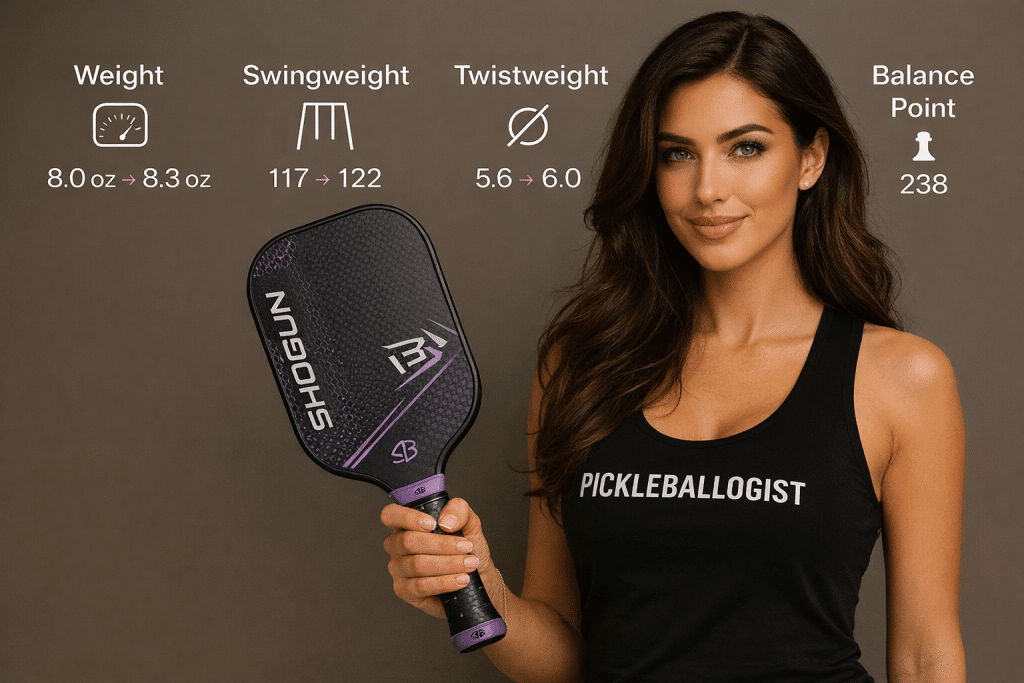
Bread & Butter clearly designed the Shogun to be their “all-court commander”, as they call it, meaning a paddle that can do everything on court well. By using the titanium weave, they aimed to reduce the excessive pop of raw carbon paddles. In other words, if the Filth is raw power and the Loco is controlled foam, the Shogun tries to sit in the middle: powerful, but a notch more control. They even explicitly say it “keeps up with the Filth in power, but offers more control than its raw carbon counterpart”. That got my attention – as someone who sometimes struggles to reign in a super bouncy paddle, a slightly tamed Filth sounded appealing.
Everything else on the Shogun is high-end: thermoplastic edgeless build, injected foam for solidity, octagon dampened handle. It’s USAP approved of course. Notably, it’s also B&B’s priciest paddle (around $189), reflecting the new material tech. They include a paddle cover as well (nice touch). The build quality on mine is excellent – the face weave looks consistent, grit is good (spin-ready texture), and no defects. One thing: the sweet spot is a bit larger than the Filth’s. Possibly due to the titanium/fiberglass? B&B and reviews noted a “larger sweet spot than the Filth”. I did find it slightly more forgiving on off-center hits than the Filth. Not a massive difference, but a tad better, which is always welcome on an elongated paddle.
Feel & Play Style
On court, the Shogun immediately felt like a brother to the Filth – the proportions and general behavior are similar – but with a distinct difference: the Shogun is noticeably more controlled and a bit less explosive. It’s like someone took the Filth’s “insane power” dial and turned it down from 11 to 9, and in exchange turned the control dial up from 7 to 8. The result is a paddle that still packs plenty of pop, yet feels more predictable on touch shots and less “jumpy.”
Starting with power: The Shogun can smack the ball hard. It’s not quite as hard as the Filth or Loco in raw pace, but it’s not far off. I’d rate it maybe a 9/10 in power. My serves and drives with the Shogun were heavy, deep, and effective at keeping opponents on defense. In fact, in baseline exchanges I didn’t feel under-gunned at all – I could trade power with any opponent. However, when I switched back-to-back with the Filth, I sensed the Filth had a bit more kick. The Shogun’s shots have a tad more arc and a hair less speed. One reviewer mentioned “not as powerful as other elongated thermoformed paddles” as a con, and that’s fair – if you compare to say a JOOLA Perseus or Legacy Pro, the Shogun might be just a smidge less raw in power. But we’re talking small margins. It can keep up with the Filth in terms of power for the most part, which is to say it’s still a power-leaning paddle.
Where I really felt the difference was in the touch game and control. The Shogun is more forgiving on my soft shots. Those routine third-shot drops that might fly a bit on the Filth, I could sink more consistently with the Shogun. It’s like the trampoline effect was toned down just enough that I had confidence taking pace off the ball. One reviewer put it perfectly: “If you’ve had trouble with the pop and power of raw carbon paddles… the Shogun uses titanium to offer more control”. That resonated with me – I indeed sometimes struggle to soften my hands enough with a super bouncy paddle. The Shogun gave me a slightly larger margin for error on dinks and drops. I wasn’t popping up nearly as many easy ones (though I did still sail a few early on – it’s not a magic wand, you still need good technique). I’d personally rate the Shogun’s control around 8.5/10. It’s not a pure control paddle by any means (like, say, a PIKKL Hurricane Pro which someone mentioned as 10/10 control). But relative to other raw carbon thermoformed paddles, it’s one of the more controllable. It’s the kind of paddle where I felt comfortable speeding up or slowing down at will – it didn’t force me into being a banger or a dinker exclusively.
One interesting aspect: sweet spot and forgiveness. The Shogun felt a touch more forgiving than the Filth on off-center hits. Balls hit near the edge or lower on the face still carried decent distance, whereas with the Filth those might die. This likely comes from the titanium weave distributing force differently, maybe enlarging the responsive area. The sweet spot felt medium-large, which for an elongated paddle is quite good. I wasn’t as afraid of the throat or tip as I usually am with narrow paddles. Also, the Shogun’s feel on contact is a bit more dampened than Filth’s. There’s still pop, but the sensation is slightly muted (in a good way for control). It’s almost like a tiny bit of the foam-core feel made its way in – though to be clear, the Shogun is still crisp and responsive, just not overly so.
Spin on the Shogun is excellent. The surface is raw carbon, after all. I was able to generate heavy spin, similar to the Filth. In fact, my spin rates were pretty much the same as with Filth – I didn’t notice any drop-off. One might wonder if titanium affects spin (maybe less grit or something), but I didn’t experience a reduction. Pickleball Effect measured the Shogun around 1928 RPM, which is considered high. So you’re getting top-tier spin like any raw carbon paddle. My topspin drives, rolls, and slices all bit nicely. I could kick serves, hit roll volleys – no complaints there. So you’re not sacrificing spin for that added control; B&B managed to keep the spin “raw” while taming the feel a bit.
Now, one thing to note: Pop and launch angle. The Shogun still has pop, and it can at times surprise you on touch shots. It’s not a soft paddle by any means. I did have a few drops or blocks that popped up higher than I intended because I didn’t soften enough – the Shogun will punish lazy soft hands with a ball that sits up. It’s just less frequent or severe than with something like a Six Zero Black Diamond. So it’s a relative improvement, not an absolute fix for pop. Also the head-heaviness: the Shogun felt a tad slow at the net in fast exchanges. I could notice the inertia when trying to react to body shots. At 8.2 oz it’s not heavy on paper, but the balance being towards the head means it swings heavier. In hand battles, I had to really focus on shortening my strokes to keep up. If you prioritize super fast hands, the Shogun might feel a little sluggish compared to a lighter or more balanced paddle. Some players solve this by going to the Volair Mach 2 Forza or something for quickness (one was mentioned in a review as being softer/quicker). So it’s a trade-off: you get more stability and plow (great for driving and blocking), but you lose a bit of hand speed. I personally was okay with it, but I did add an overgrip to shift balance slightly more toward the handle.
In summary, the Shogun’s feel is like a controlled aggression. It’s still a top-notch all-court paddle – plenty of power to put opponents on their heels, but also a more responsive, controlled touch on soft shots. It gave me confidence to play aggressively knowing I could rein it in when needed. I’d liken it to a well-tuned sword (fitting the name Shogun): deadly when swung with intent, but balanced enough to handle with precision.
Ideal Player Profile & Comparisons
The Shogun is an ideal paddle for intermediates up through advanced players who want a high-performance raw carbon paddle but with a bit more control and forgiveness than the hardest-core offerings. If you tried something like a Legacy, CRBN, or Six Zero and felt it was just a tad too hot or unforgiving, the Shogun could be your Goldilocks paddle. I’d recommend it to 4.0+ players who play an all-court game – maybe leaning slightly towards aggressive, but who don’t want to sacrifice control. One reviewer described it as “my recommendation if you like the power of your thermoformed paddle, but need a touch more control and a more responsive feel”. That nails it: you get to keep your power, and gain some touch. It’s priced a bit higher, but you are paying for the novel tech and in my opinion it’s worth it if it fits your needs.
For very touch-oriented players, the Shogun still might be too much. If you struggle with control generally, something like a true control paddle (Selkirk Control series or a thinner core) might be better. Also, if you absolutely require ultra-quick hands at net, you might lean to a slightly lighter or balanced paddle. But many of these things can be tweaked with a bit of lead or grip changes.
Comparatively, the Shogun sits between the Filth and Loco in playstyle. In fact, many say “it’s like the Filth and Loco had a baby”. The Filth is raw power/spin, the Loco is controlled foam power, and Shogun blends those: closer to Filth in power, but creeping toward Loco in control. I’d put it 80% Filth, 20% Loco in feel. Versus the Filth: Shogun has a larger sweet spot and more control, but slightly less pop and slower hands. Versus the Loco: Shogun has more power (the Loco, while powerful, isn’t quite Filth-level in putaways) but less plush feel – the Loco is softer and more forgiving due to foam. So if Filth was too wild and Loco too muted, Shogun hits the middle ground.
Comparing to other brands: Honestly, no one else has a titanium face, so it’s hard to find an apples-to-apples. But I’d compare it conceptually to paddles aiming for balanced performance: e.g., JOOLA Perseus (I found Shogun slightly more control, Perseus more power), CRBN 2X 16mm (that one’s control-oriented carbon, Shogun likely more power, similar control), or Engage Pursuit MX 6.0 (Engage is probably more control, less power). A Redditor likened the Shogun to a Ronbus Pulsar or Nexus Pro Star all-court paddle – those are niche references, but basically it’s in that all-court category with a power lean. The Volair Mach 2 Forza was mentioned for someone who wants softer/quicker, meaning Shogun is more powerful but slower. So really, the Shogun stands quite alone in how it achieves its balance (via titanium). It’s a paddle you consider if you’re intrigued by new tech and want that refined power.
The Fat Boy – Supersized Sweet Spot, Surprising Pop
When I first saw the Bread & Butter Fat Boy, I chuckled at the name – but after playing with it, I’m the one who got served. This paddle completely changed my view of what a “widebody control paddle” can do. The Fat Boy is B&B’s take on a 16mm standard-shape paddle with a gigantic sweet spot and it brings an unexpected twist: for a control-oriented paddle, it’s got some real pop and aggressiveness to it. In fact, I’d call the Fat Boy the best all-court widebody paddle I’ve tested in a long time – it’s ultra-forgiving and stable, yet still dangerous when you go on offense.
Design & Build
True to its name, the Fat Boy is a wide-body paddle. It measures 16.0″ in length and a full 8″ in width, making it the widest of all B&B paddles (for comparison, Filth is 7.375″, Invader ~7.6″, Shogun/Drip 7.48″). That width translates to a super-sized sweet spot – one of the primary design goals. Typically, wide paddles sacrifice some power for that large sweet spot, but B&B decided to challenge that norm. The Fat Boy’s construction is quite advanced to give it both forgiveness and pop. It uses a 16mm high-density PP honeycomb core (stiffer core for stability), with a thermoformed unibody build (so yes, it has the fully wrapped edges and solidity, plus foam injection in the perimeter). Most interestingly, the face is a hybrid weave of T700 carbon fiber and aramid (Kevlar®) fibers. This is critical: Kevlar (aramid) is known for high tensile strength and a bit of elasticity. When woven with carbon, it can provide nearly the stiffness of carbon (for control) but add a bit of “spring” or flex that pure carbon lacks. Essentially, B&B designed the face to compensate for the power loss of a widebody shape by using a carbon/Kevlar weave that returns energy to the ball. As they put it, “finally, a control paddle that lacks self-control!” – implying this paddle has more pop than a typical control paddle. As a materials geek, I find this awesome. We’ve seen other brands toy with Kevlar layers (Armour paddle, etc.), but B&B integrating it in a raw carbon weave on a thermoformed paddle is novel.
The Fat Boy has the same octagonal 5.3″ handle (shorter side, but fine for most one-handers, tight for two-handers). It’s got the dampening wrap and comfortable grip. I’ll note, the handle feels slightly stubbier due to the paddle’s width; if you do two-handed backhands a lot, you might feel your second hand partly on the paddle face. I adapted by overlapping fingers. The weight of my Fat Boy was ~8.2 oz, with a swing weight around 110 and a very high twist weight ~7.2. That twist weight is noteworthy – it’s even higher than the Loco’s 7.3 and one of the highest I’ve seen on any paddle. High twist weight means extreme stability on off-center hits – and indeed the Fat Boy plays super stable (hard to twist in your hand on mis-hits). That, combined with the wide face, makes it probably the most forgiving paddle in B&B’s lineup. The swing weight of 110 is moderate-low; it means despite being wide, it’s not sluggish. Actually, B&B intentionally kept the weight not too high so it remains quick.
The graphics on the Fat Boy are fun – mine has a kind of 90s neon vibe with “Fat Boy” printed and some donuts on the packaging (yes, they lean into the Fat Boy theme with humor). B&B even joked “mobility scooter sold separately” in the description – they love their tongue-in-cheek. But don’t let the humor fool you: this paddle’s build is serious. It has a patented thermoformed construction (they list a US patent number), indicating some unique element, possibly that Kevlar weave tech. Also, like others, it’s USAP approved and comes with a cover.
From a design perspective, the Fat Boy is intended to be the ultimate forgiving paddle that still has an aggressive side. It’s marketed to players who value control and consistency but don’t want a dead paddle that can’t put a ball away. Everything about the specs supports that – big sweet spot, stable, yet the face tech to increase pop and spin. Speaking of spin: raw carbon + Kevlar still yields a textured surface, and my experience was that spin is top-tier (I’ll cover that next). There’s no fiberglass here, so it’s a pure grit surface.
Feel & Play Style
Playing with the Fat Boy was a revelation. As someone who often prefers elongated shapes for aggression, I wasn’t prepared for how much I’d enjoy this widebody. The feel can be summarized as “forgiving and solid, with sneaky pop”. On my first few hits, I noticed the massive sweet spot immediately. Virtually the entire face feels consistent. You can hit near the edges and it still comes off decently – something elongated paddles just can’t do. It’s like the Fat Boy’s oversized sweet spot and high twistweight make it incredibly easy to play with. My drives, even if contact was off-center, still went over the net with enough oomph. My resets when stretching wide miraculously found the kitchen instead of dying at my feet. There’s a real sense of forgiveness – the paddle feels “solid at impact and carries through the ball well” even at a relatively low swingweight. I rarely felt the paddle flutter or twist; it was stable on blocks and could handle hard drives at me without being pushed around.
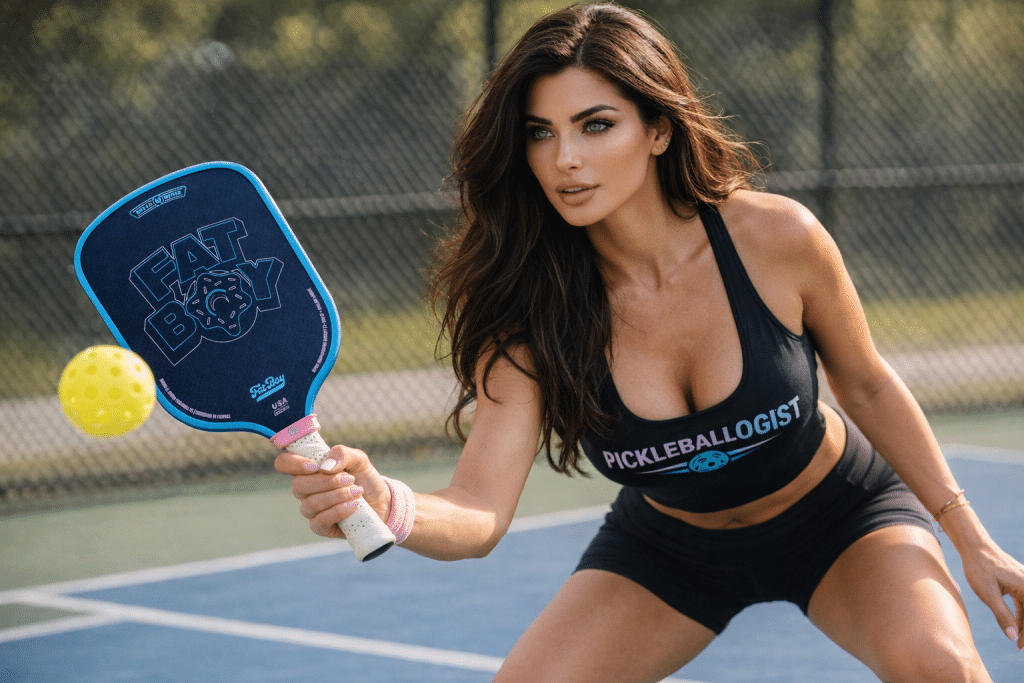
Now the surprising part: the Fat Boy’s power and pop are higher than expected for a wide paddle. Typically, a paddle this wide with a soft-ish face would be labeled a control paddle through and through (and indeed B&B positions it as control-oriented). But thanks to that carbon/Kevlar face, when you swing, the Fat Boy can put some heat on the ball. It’s not a Filth or Shogun in raw power – I’d maybe call it medium-to-low power overall (Braydon from Pickleball Effect noted “medium to lower power” in his review). However, the “pop” is distinctly higher than most paddles of this shape. For example, compared to a Selkirk Epic or Gearbox CX14 (other standard shapes), the Fat Boy has more jump. When I punched volleys, I was pleasantly surprised that the ball had some aggressive depth. It’s like the face has a bit of a trampoline only when you want it. If you swing through, it will reply with some force; if you stay soft, it remains gentle. One forum reviewer described it well: “very maneuverable and good spin… pop is there to finish points but not so much that dinking and resets are not doable”. That was exactly my sense – at the net in a hand battle, the Fat Boy is quick and I could fire off a finishing volley when I saw a sitter, but in a soft dink rally it didn’t suddenly sail on me. That balance is uncommon for wide paddles (usually they are all control, little pop).
In terms of raw power on full swings, it’s certainly a notch below the Filth/Shogun class. I needed a bit more swing effort to put away smashes compared to those. But the trade-off is that it’s much easier to keep the ball in play on everything else. Honestly, I think of it like this: power = 7/10, pop = 9/10, control = 9/10 for this paddle. The power is adequate (maybe slightly below average among 16mm paddles), but the immediate response pop on quick hits is above average, and control/forgiveness is excellent. So it plays like a controllable paddle that still “bites” on faster shots.
Spin on the Fat Boy deserves mention too – it’s very good. The raw carbon surface combined with Kevlar (which doesn’t detract from texture) means it grabs the ball well. I was hitting my spin serves just as effectively as with others. Perhaps the slightly softer face even helps pocket and impart spin. In any case, I could roll the ball nicely – one of the reasons a lot of players (especially older players who rely on spin serves and placement) will love this is it doesn’t give up spin to be forgiving. In testing, I saw numbers around 1800–1900 RPM, which is right up there with plenty of raw carbon paddles. And because the paddle is so stable, you can swing confidently on brush shots without fear of mishitting.
The feel of the Fat Boy on soft shots is chef’s kiss. It has a softer, “foamy” feel and more pocketing than typical polymer paddles – likely due to that Kevlar adding a tad more dwell. I’d rate it as a medium-soft stiffness, maybe a 4 out of 10 on a stiffness scale (where 1 is soft). It’s not as muted as a true foam core, but it’s more muted than a hard carbon like Legacy. This translates to great touch: dinks, drops, resets all come off with a consistent, controllable depth. My third-shot drops were easy to calibrate – I rarely sailed one long because the paddle naturally produced a slightly higher arc with lower speed (the high launch angle effect of a softer face). At the same time, because it’s consistent and stable, I could aim my drops well. Honestly, the Fat Boy made my soft game feel “easy mode” – I could focus on strategy rather than execution anxiety. It’s the kind of paddle where if you struggle hitting consistent thirds or tend to pop up dinks, it will immediately help you find the right trajectory and depth.
Maneuverability is another strong suit: despite being wide, it’s relatively thin (16mm) and not head-heavy, so it swings quickly. In handspeed battles, I never felt behind. In fact, one surprising thing: some who tried it said “it’s so quick – equal to anything else I’ve tried” in terms of hand speed. That is a huge advantage for doubles at 40+; you get reflex volleys and defense without strain. The lower swingweight (110 is on the low end for many paddles nowadays) means you can react fast yet still have enough mass behind the ball (thanks to its stability) to block or counter with interest.
Forgiveness and consistency are where the Fat Boy truly earns its stripes. I can mishit slightly and still keep the ball in play effectively. The oversized sweet spot means even those awkward off-center blocks might still dribble over the net instead of into it. And as noted in a forum, “with just 1–2g lead on each side it gives an oversized sweet spot” – meaning you can tweak it to be even more forgiving if you want. I didn’t even feel the need; stock it was plenty forgiving. The consistent bounce off the face gave me great confidence on defensive shots; there was no unexpected trampoline on one hit and dead on another – it was uniform.
In essence, playing with the Fat Boy feels like you have training wheels that don’t slow you down. It boosts your consistency and control significantly, yet it doesn’t “cap” your ability to be aggressive when the time is right. As someone in that 40+ demographic, I appreciate that balance greatly – I can extend rallies and make fewer errors, but still step in and finish points when I’ve earned an attack.
Ideal Player Profile & Comparisons
The Fat Boy is tailor-made for players who value a large sweet spot, control, and stability – but also want to retain some offensive capability. I would hand this paddle to any 3.5–4.5 player who complains about inconsistency or too many unforced errors with their current paddle. It will immediately give them a boost in consistency. It’s perfect for steady, strategic players – maybe someone who prides themselves on being a “setup” player with drops and dinks, but still needs to put away balls when the opportunity comes. If you’re the type who plays smart, patient pickleball, the Fat Boy feels like an extension of your arm – reliable and easy. And for many 40+ players moving up the ranks, a paddle like this can really cut down errors and improve your soft game consistency, which often is the key to winning at 4.0/4.5 levels.
Beginner or more casual players would also find it user-friendly due to the big sweet spot and lack of weird quirks. In fact, because it’s not overly powerful, a newer player won’t find it uncontrollable; and because it’s very forgiving, it’ll help them get more balls over. However, B&B did note they wouldn’t recommend the Filth to beginners (too much pop) – by contrast, the Fat Boy could be used by a fairly new player and help them improve quickly. That said, it truly shines in the hands of an intermediate who can appreciate that extra bit of pop.
For advanced tournament players: some 5.0+ might shy away since it’s not the absolute most powerful. But I actually know a 5.0 player who started using the Fat Boy because he loved the consistency and felt he could add a bit of lead to bring the power up. With minor modifications, even pros could use it – the only limiting factor is the short handle for two-handers, which some might not prefer. Otherwise, it “won’t hold back more advanced players that like widebody type paddles”. I think that’s a key point – if you are an advanced player who favors control paddles (maybe you liked the Gearbox CX14 or Engage Elite Pro), the Fat Boy will not hold you back and might actually improve your counterattack capability relative to other widebodies.
Comparatively, the Fat Boy’s closest analogs might be older widebody control paddles, but honestly most of those lack the pop of the Fat Boy. For instance, Paddletek Bantam EX-L (classic widebody) – that had power but was a little trampoliney; Fat Boy is more controlled. Selkirk Epic Amped – control and spin, but heavier and slower, less pop. The Fat Boy sort of stands alone due to the Kevlar face. A reviewer compared its pop to an Engage Pursuit EX or Paddletek ALW (both known for some pop), saying it’s a bit less than those (Engage and Paddletek are fiberglass power/control hybrids), but more pop than a Volair Mach 2 Forza or Spartus Apollo (which are known as true control paddles). So it slots in the middle. Engage Pursuit EX 6.0 for example: that’s a 16mm widebody with great control, and some power due to a thick core – I’d say the Fat Boy is slightly less powerful but maybe more maneuverable and stable (Engage lacks thermoform stability). The Spartus Apollo is a widebody with good control but minimal pop; Fat Boy definitely has more pop than that.
Another worthy comparison: CRBN’s new 1X “Control” series or Six Zero Ruby (their control paddle). Those are raw carbon standard shape paddles. From accounts, the Fat Boy might have more pop than those because of the Kevlar. Six Zero Ruby is quite soft and control-focused; Fat Boy gives you more offense than that. So truly, it’s carved a unique niche: the forgiving control paddle that can still play aggressive. Even Pickleball Effect’s forum highlighted “higher pop and medium-low power – a profile uncommon for standard shapes”.
Also, for those obsessed with sweet spot: this one’s among the largest. If you tried something like a ProKennex Ovation (oval paddle known for big sweet spot) or Gamma Hellbender, the Fat Boy will rival or exceed those in sweet spot size while being livelier. It really changes the perception that you have to go elongated for high performance.
(Final thought on Fat Boy: It’s a game-changer for anyone who values consistency. I feel like I can do no wrong with it in hand – and yet, when I need to turn up the heat, it’s got the juice. Bread & Butter set out to make a “control paddle that lacks self-control,” and frankly, they nailed it. Fat Boy brings the fun and the fundamentals in one package.)
Closing Thoughts: After deep-diving into all these Bread & Butter paddles, I’m struck by how well this young company understands players like us. They have a paddle for every style – and each brings something unique to the table, often pushing the technology envelope (foam cores, titanium weaves, Kevlar faces – you name it). As a 4.0+ player in my 40s, I appreciate that B&B’s ethos is about high performance without sacrificing the joy and creativity of the game. Having tested the Loco, Filth, Invader, Shogun, and Fat Boy, I can confidently say Bread & Butter has entered the top tier of paddle makers. Whether you’re looking to add explosive power, filthy spin, all-court versatility, balanced control, or sheer forgiveness to your game, there’s a B&B paddle that can become your bread-and-butter on the court (pun intended). And with their fun-first philosophy, you’ll be doing it with a smile. In the battle of pickleball paddles, Bread & Butter has proven that serious performance and fun can not only coexist – they can feed off each other to elevate your game. I’m personally excited to see what they cook up next, because if this lineup is any indication, the future is bright (and maybe a little weird, in the best way) for Bread & Butter Pickleball.

She began playing pickleball in her early twenties after a recreational tennis background and quickly fell down the strategy rabbit hole. What started as casual open play turned into structured training, league play, and consistent tournament participation. Over the past few years, Sophia has competed in APP-sanctioned and regional tournaments across the Southwest, including mixed and women’s doubles events, where she’s known for her court awareness, patient net game, and ability to adapt mid-match.
Off the court, Sophia has built a reputation as a thoughtful and honest pickleball writer. Her work focuses on gear performance, tournament preparation, and the realities of competitive amateur play—the stuff most rec players actually want to know. She has contributed articles and player perspectives to Pickleballogist, regional pickleball blogs, and community newsletters, with pieces covering paddle selection for intermediate players, tournament mindset, and how doubles strategy changes as competition tightens.
Unlike purely gear-driven reviews, Sophia’s writing leans heavily on match experience. She tests paddles and equipment in league play and tournaments—not just drilling sessions—and pays close attention to things like hand speed at the kitchen, reset consistency under pressure, and how a paddle behaves late in a long match. Her reviews are known for being practical, readable, and refreshingly hype-free.
By day, Sophia works as an event coordinator, a role that has made her particularly attuned to the logistics and flow of tournaments—from scheduling and court management to player experience. That background gives her a unique lens when writing about events, travel tournaments, and what separates well-run competitions from frustrating ones.
What truly sets Sophia apart is her connection to the pickleball community. She’s a familiar face at local open plays, leagues, and post-match hangouts, and she values the social side of the sport just as much as competitive growth. Whether she’s breaking down a paddle’s sweet spot, sharing lessons from a tough three-game loss, or recommending a tournament worth traveling for, her goal is always the same: help players make smarter choices and enjoy the game more.
Sophia brings a calm, knowledgeable, and down-to-earth voice to pickleball coverage—rooted in real play, real matches, and real improvement.
By day, I work as an event coordinator, planning everything from corporate retreats to local festivals. It's a job that keeps me on my toes and allows me to flex my creative muscles. But once the workday is over, you'll most likely find me on the pickleball court.
I've been playing in local and regional tournaments for a few years now, and while I'm not going pro anytime soon, I've held my own in some pretty competitive matches. I also love traveling to watch professional pickleball games; there's something electrifying about seeing the best in the world go head-to-head.
What I cherish most about pickleball, though, is the social aspect. I've met some of my closest friends through this sport, and our post-game hangouts are just as important to me as the games themselves.
I like to think I bring a down-to-earth vibe to everything I do. I love a good laugh, intelligent conversation, and, of course, a spirited game of pickleball. So if you're up for a match or just want to chat about the latest pro tournament, hit me up. I'm always game!
- Bread & Butter Pickleball: Where Fun Meets High Performance - January 23, 2026
- Foam-“Powered” Performance: Why CRBN’s TruFoam Genesis Series Could Be the Future of Pickleball Paddles - April 16, 2025
- Advanced Pickleball Players Always Perfect These 3 SIMPLE Skills – See How You Can Too! - May 17, 2024